
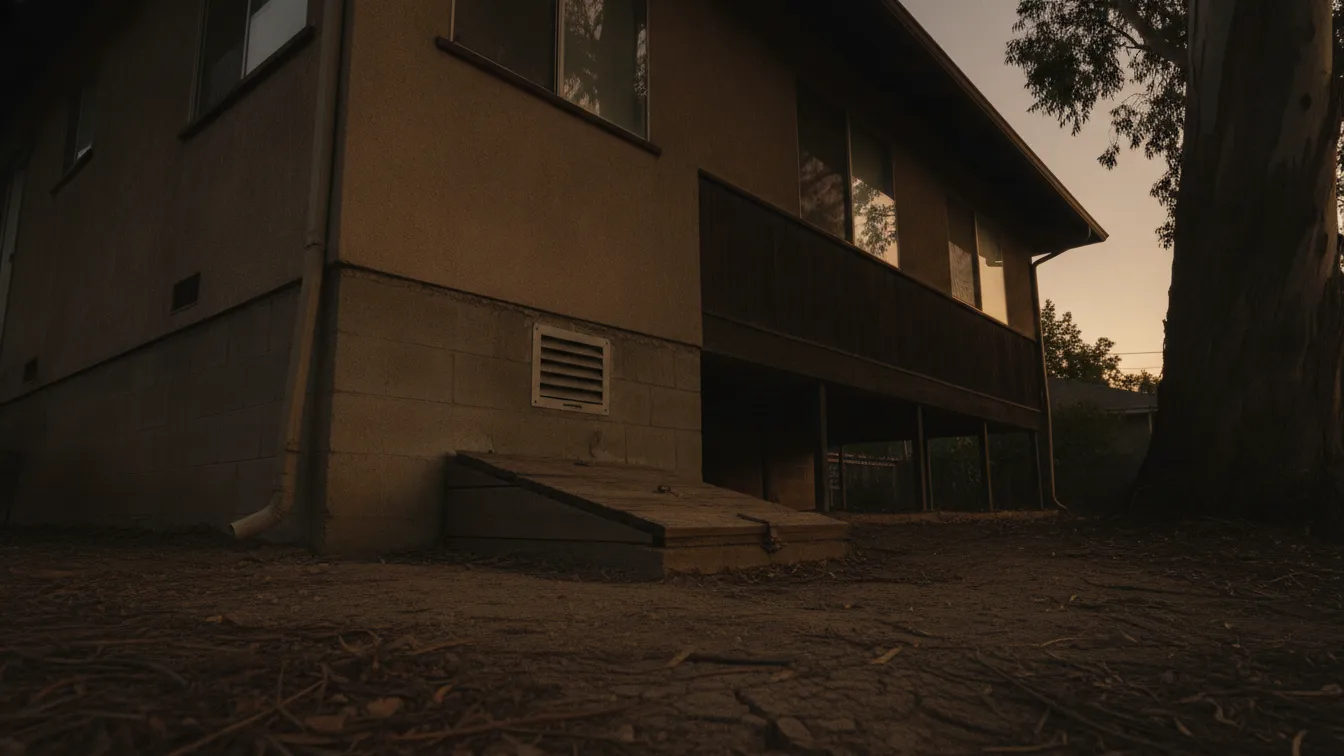
Crawl space insulation in Los Angeles
The space under a raised house is where floors get cold, moisture collects and pests find a way in. We look at it first, then insulate it the way it needs.
A house on a raised foundation has its floor over a crawl space, and what happens down there reaches the rooms above.
Crawl space insulation is the work of insulating either the underside of that floor or the walls of the space itself. Which one is right depends on how the space is built, how dry it is and what runs through it.
We insulate crawl spaces in houses across Los Angeles and Ventura County, from Pasadena, Culver City and Hollywood to Calabasas, Westlake Village and the South Bay. If you are comparing this with other work, see all our insulation services.
Signs the crawl space needs attention
You rarely see the space under the house, so the signs show up in the rooms above or at the access hatch.
Floors that feel cold or uneven
A floor over an open crawl space can feel cold underfoot, and uninsulated floor framing is a common reason.
Dampness, a musty smell or stained wood
Moisture is the first thing to check. Insulating over a wet space only hides the problem, so we deal with water before anything goes up.
Droppings, nests or chewed material
Openings at the foundation vents, the access cover and where pipes enter let rodents in. Sagging batts give them somewhere to nest.
Drafts through the floor
Gaps around pipes, wiring and the framing let air from the crawl space into the house.
Ducts or pipes running under the floor
Ducts and pipes in an open crawl space sit outside the heated part of the house. Insulating the space or the floor changes how they behave.
Old insulation that has fallen or got wet
Batts that have dropped from the joists or soaked up moisture are not doing their job and may be holding the damp against the wood.
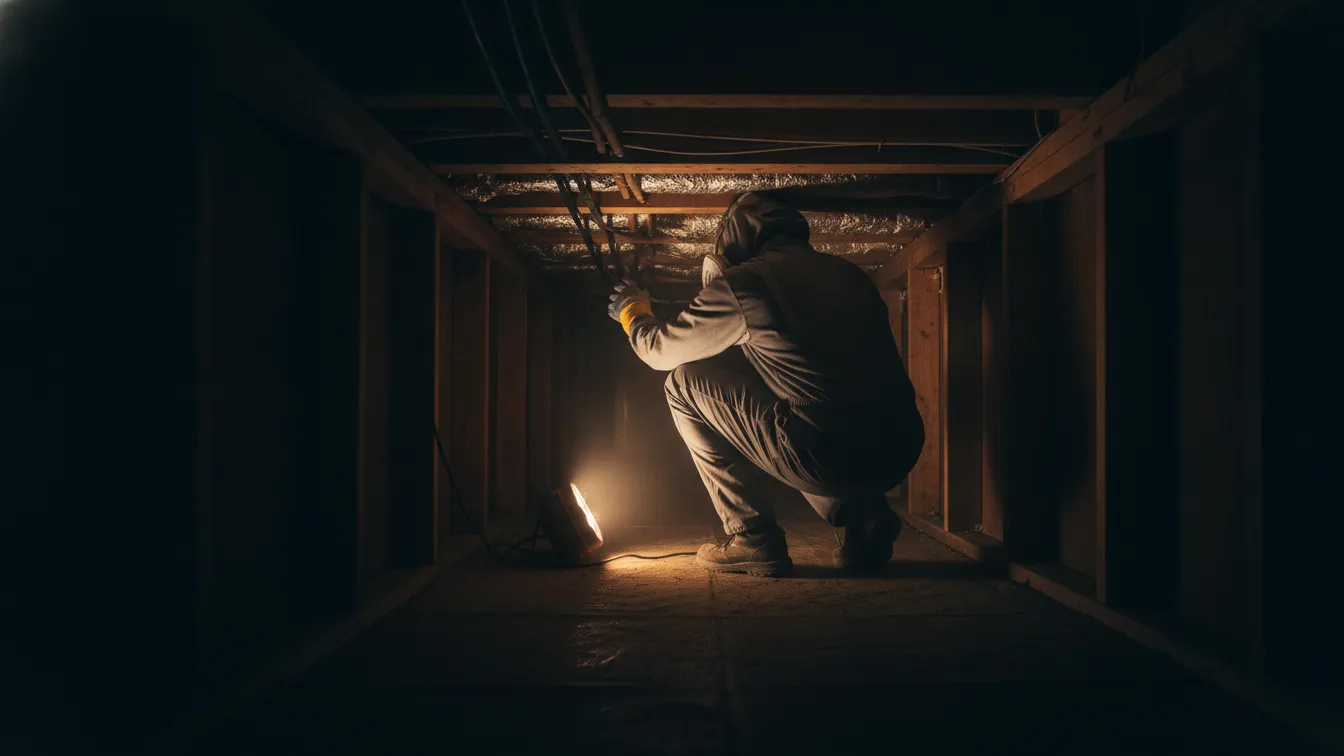
Two ways to insulate a crawl space
Under the floor. In a vented crawl space, the insulation goes against the underside of the floor in full contact with it. The floor and the joists are air sealed first, so the insulation is not just sitting in moving air. Federal guidance lists underfloor insulation for dry and marine climates.
Around the walls. In a sealed crawl space, the vents are closed, the ground is covered with a continuous plastic sheet and rigid foam goes on the foundation walls. The space is then treated as part of the house, which suits ducts and equipment that sit below the floor. Sealing the vents alone does not make this work, and doing only that can make a damp space worse.
Closed-cell spray foam can also be applied over the ground cover. It suits a space that is not entered often.
What we check before we insulate
The condition of the space decides the plan, so we look before we propose anything.
- Water. Standing water, damp soil and leaking pipes are fixed first. Gutters, downspouts and the grade around the foundation matter too.
- Rot and mold. Damaged wood is dealt with before it is covered.
- Pests. Rodents and their nesting material are cleared. UC IPM advises closing openings larger than a quarter inch and keeping a tight-fitting cover on the crawl space access.
- Ground cover. A continuous plastic sheet, lapped and taped at the seams, keeps ground moisture from evaporating into the space. It is needed even when the space is not sealed.
- Radon. It is worth considering a test before sealing a crawl space, and a vent pipe goes in before the insulation if one is needed.
- Fuels and appliances. Flammable materials are kept out of the space, and a sealed crawl space should not draw combustion air from a low-efficiency appliance.
Who it suits and how it fits with the other services
Crawl space insulation suits a raised house with a cold floor, a damp or open space or ducts running below it. A house on a slab has no crawl space to insulate.
It works with the rest of the house. A floor over a crawl space is one more surface where heat moves, alongside the roof and the walls. See attic insulation and wall insulation for those, and spray foam insulation for foam in a space like this one. If the space has been soiled by rodents, the first job is rodent-damaged insulation.
What the visit looks like
You tell us about the house
When it was built, where the access is, and what you have noticed, such as cold floors, damp or signs of pests.
We go in and look
We check the ground, the framing, the pipes and ducts and any moisture, and tell you what the space needs and in what order.
We prepare the space
Water problems are named, pests are cleared, and openings are closed. The ground cover goes in where the plan calls for it.
We insulate and close up
Insulation goes on the floor or the walls, the access is closed with a tight cover, and the working area is left clean.
Crawl space insulation questions
Is it worth it to insulate a crawl space?
It depends on the space. A dry crawl space under a cold floor, with ducts or pipes below it, is a good candidate. A wet one is not until the water is dealt with. We look at the space and tell you which case yours is.
What is the best insulation to use in a crawlspace?
There is no single product. Under the floor, insulation that sits in full contact with the underside works. In a sealed space, rigid foam on the foundation walls over a ground cover is the usual choice, and closed-cell spray foam over the ground cover suits a space that is rarely entered.
What has to be fixed before insulating a crawl space?
Water first, then rot, mold and pests. Drainage around the foundation, leaking pipes and any standing water come before anything is installed. A radon test is also worth considering before the space is sealed.
Should I close the vents in my crawl space?
Closing the vents alone is not enough. A sealed crawl space needs a continuous ground cover, insulated walls, air sealing and a way to keep the space dry. If the vents are just blocked, a damp space can get worse.
Will insulation in a crawl space attract rodents?
Batts that sag or get damp can give mice and rats somewhere to nest, which is one reason the approach matters. Closing the gaps they use and keeping a tight cover on the access does more to keep them out than the choice of material.
Cold floors or a damp space under the house? Tell us what you see and we will tell you how we would look at it.
Get started
Get the space under your house looked at
Call us, or send the form and we will call you back. We work across Los Angeles and Ventura County, and we are licensed and insured.