
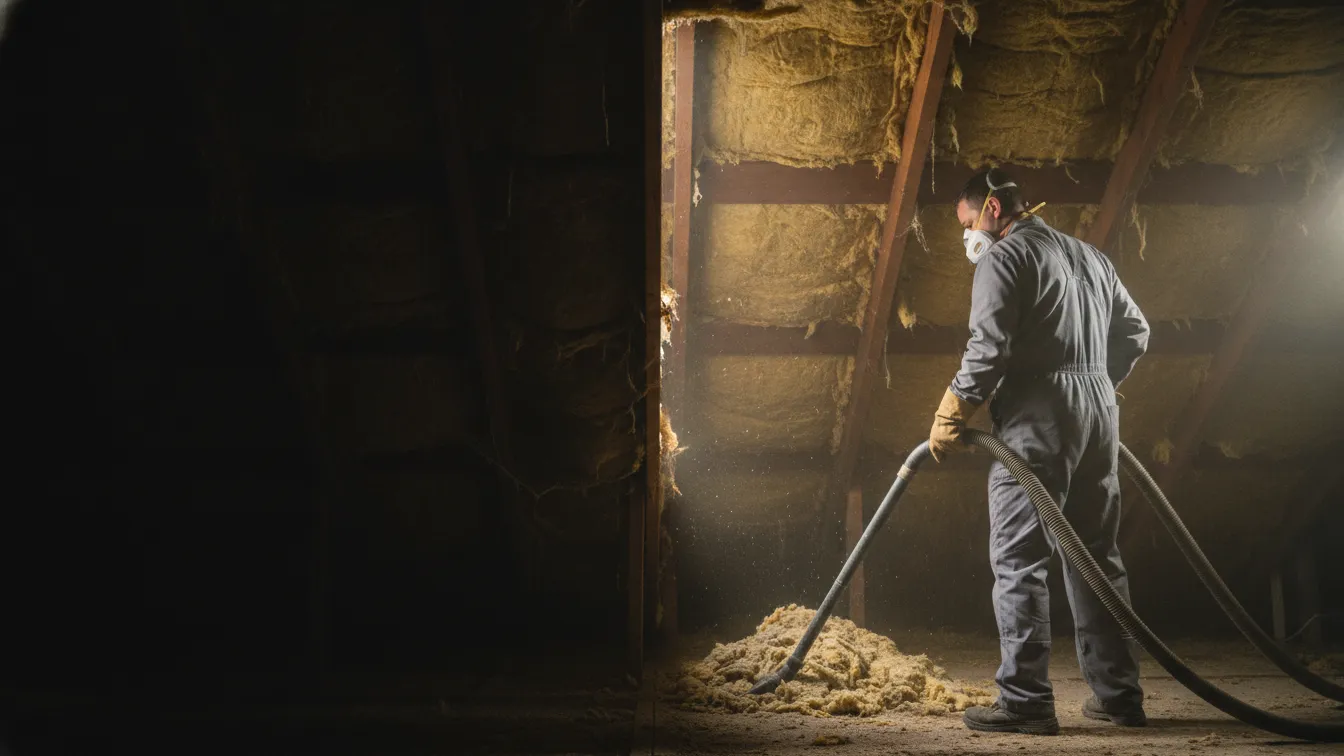
Insulation removal in Los Angeles
Old, soiled or damaged attic insulation taken out, the attic cleaned, and the floor left ready for new insulation. Licensed and insured.
Insulation removal means taking the old material out of the attic so the space can be cleaned and, if it makes sense, insulated again.
Some attics need the old layer gone because it has been soiled, soaked or flattened beyond use. Others need it moved aside for a repair and put back.
We remove attic insulation, and clean the attic around it, in houses across Los Angeles and Ventura County, from Santa Monica and Beverly Hills to Pasadena, Tarzana and Calabasas. If you are not sure whether your attic needs removal or only new insulation on top, start with all our insulation services and we will help you sort it out.
When old insulation should come out
Insulation can usually stay in place and be added to. These are the situations where it cannot.
Rodent droppings and nesting
Rats and mice shred insulation for nests and soil it with droppings and urine. Soiled material is taken out rather than covered over. The rodent-damaged insulation page covers that case in full.
Water damage and mold
Insulation that has been soaked by a roof leak or a leaking pipe can hold moisture against the framing. The EPA notes that porous materials affected by mold may need to be thrown away.
Dust and debris from old work
Decades of settled dust, construction debris and the remains of old repairs end up in the insulation. Cleaning the attic properly means moving the material out first.
Vermiculite
Pebble-like gray-brown or silver-gold insulation poured between the joists may contain asbestos. The EPA says to assume it does and not to disturb it. Our section below explains what that means for you.
Repairs under the insulation
Wiring, ducts, plumbing and framing sometimes need work that cannot be done through a thick layer of insulation. It is lifted out, the work is done and new material goes back.
A fresh start before new insulation
Flattened, patchy or mixed layers are hard to improve by adding more. Taking the old layer out gives a clean floor for the attic insulation that follows.
How attic insulation is removed
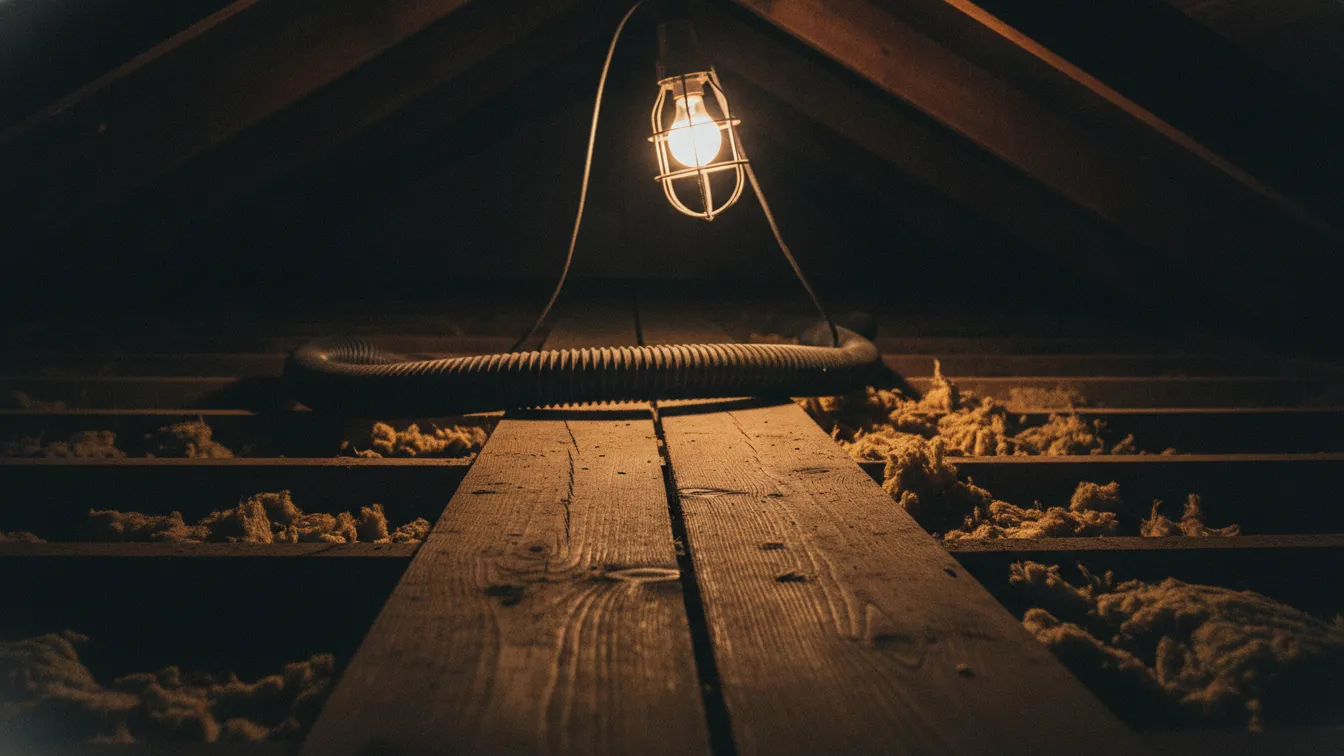
The method depends on the material. Loose-fill insulation, the blown fluffy kind in cellulose or fiberglass, is usually taken out with a high-powered vacuum. A long hose runs from the attic to a collection point outside the house, so the material does not have to be carried through the living space. Batts and blankets, the pre-cut rolls and panels, are lifted out by hand, rolled and bagged.
The work is dusty, so the people doing it wear respirators, gloves and eye protection. The hatch and the route through the house are protected, and the attic is swept and vacuumed once the material is out. A working area left clean is part of the job, not an extra.
Sealed bags of used insulation are taken away for disposal. Where the material is contaminated, for example with droppings or moisture damage, the handling is stricter, because disturbing it can put particles in the air.
Insulation removal and attic cleaning
People search for attic cleaning, attic cleanup and attic insulation cleaning when they want an attic that is clean again. In practice that almost always starts with removal. Insulation holds on to dust, droppings and odors, and it cannot be washed. The usual sequence is to take the old material out, vacuum the framing and decking, deal with what caused the problem, and then insulate again.
That is why the page you are on covers both. Cleaning around the old insulation is only worthwhile when the insulation itself is sound. When it is not, removal is the cleaning.
Vermiculite insulation
Vermiculite attic insulation is a loose, pebble-like fill, usually gray-brown or silver-gold. Some of it contains asbestos. The EPA advises assuming that vermiculite insulation contains asbestos, not disturbing it, and having trained asbestos professionals handle any removal. It also advises keeping trips into the attic few and short.
If you see this kind of material in your attic, do not sweep it, vacuum it or dig through it. Tell us what you see, a photo from the hatch is enough, and we will tell you how we can help.
What decides the cost of removal
There is no honest flat figure for insulation removal, because attics differ. These are the things that move the cost, in rough order of how much they matter:
- How big the attic is and how hard it is to reach. A wide, open attic with a large hatch is a different job from a low, split attic reached through a closet.
- How much material there is. Depth, area and how packed down it has become.
- What kind of material it is. Loose-fill, batts, or a mixture, and whether it is soiled, wet or contaminated.
- What is in the way. Ducts, wiring, recessed lights and stored items all slow the work.
- What happens afterward. Removal alone, or removal followed by new insulation.
If you are comparing quotes, ask what is included: the vacuuming, the disposal and the cleaning of the framing. Our guide to attic insulation cost explains how the price of the new insulation is built up.
Why not do it yourself
It is possible, and the work is unpleasant. Old insulation is itchy and dusty, and the attic can be hot and cramped with loose boards and wiring underfoot. If the material is moldy or soiled, the EPA recommends a properly fitted N-95 respirator, long gloves and goggles without ventilation holes, and a professional for hidden mold or areas larger than about 10 square feet. If it might be vermiculite, leave it alone entirely.
Disposal is the other half of the job. A lot of material takes up a lot of room in bags, and it needs somewhere to go.
How removal relates to our other services
Removal usually leads to something else. After a clean attic comes new attic insulation, and where the old insulation was spoiled by animals the cause is dealt with first, as described on the rodent-damaged insulation page. ENERGY STAR advises sealing air leaks in the attic before adding insulation, and an empty attic floor is the easiest moment to do that. Under the house, crawlspace insulation follows the same logic, and roof decks can be covered with spray foam.
What the work looks like
You tell us what the attic holds
Describe the insulation if you can, what you have seen or smelled, and how you get into the attic. A photo from the hatch helps.
We look at the attic
We check the material, the access, and what lies under and around it, including anything that could be vermiculite.
The old material comes out
Loose-fill is vacuumed, batts are rolled and bagged, and the framing and decking are cleaned.
The attic is left ready
It is either ready for new insulation or ready for the next repair, with the working area cleaned up.
Insulation removal questions
How much should insulation removal cost?
It depends on the size of the attic, how much material there is, what kind it is and whether it is soiled, and whether new insulation follows. We do not quote a figure on this page because it would not be true for your attic. Tell us about the house and we will explain what goes into the number.
Is it worth removing old insulation from an attic?
It is when the material is soiled by rodents, soaked by a leak, moldy or mixed with vermiculite. In those cases adding a new layer on top only seals the problem in. If the old insulation is dry, clean and simply thin, it can often stay and be added to.
Can I remove insulation myself?
You can, but it is hard, dusty work and the protective gear matters. The EPA advises against disturbing vermiculite attic insulation and says trained professionals should remove it. Soiled or moldy insulation also calls for a respirator, gloves and goggles, and for professional help when the area is large.
How do you get rid of old insulation?
Loose-fill is vacuumed out through a hose and batts are rolled and bagged by hand. The bagged material is then taken away for disposal. Contaminated material is handled more carefully so that nothing is stirred into the air of the house.
What is the difference between insulation removal and attic cleaning?
Attic cleaning is the goal and removal is usually how it happens. Insulation cannot be washed, so when it holds droppings, dust or odors, it is taken out and the framing is cleaned. When the insulation itself is sound, only the surrounding debris needs attention.
Does vermiculite insulation need special handling?
Yes. The EPA says to assume vermiculite insulation contains asbestos, not to disturb it, and to use trained asbestos professionals for removal. If you think you have it, leave it alone and tell us what you see.
Not sure whether the old insulation has to come out? Send us a photo from the attic hatch and we will tell you what we see.
Insulation removal
Get the old insulation out of your attic
Call us, or send the form and we will call you back. We work across Los Angeles and Ventura County, open every day, every day, 7 a.m. to 11 p.m.